
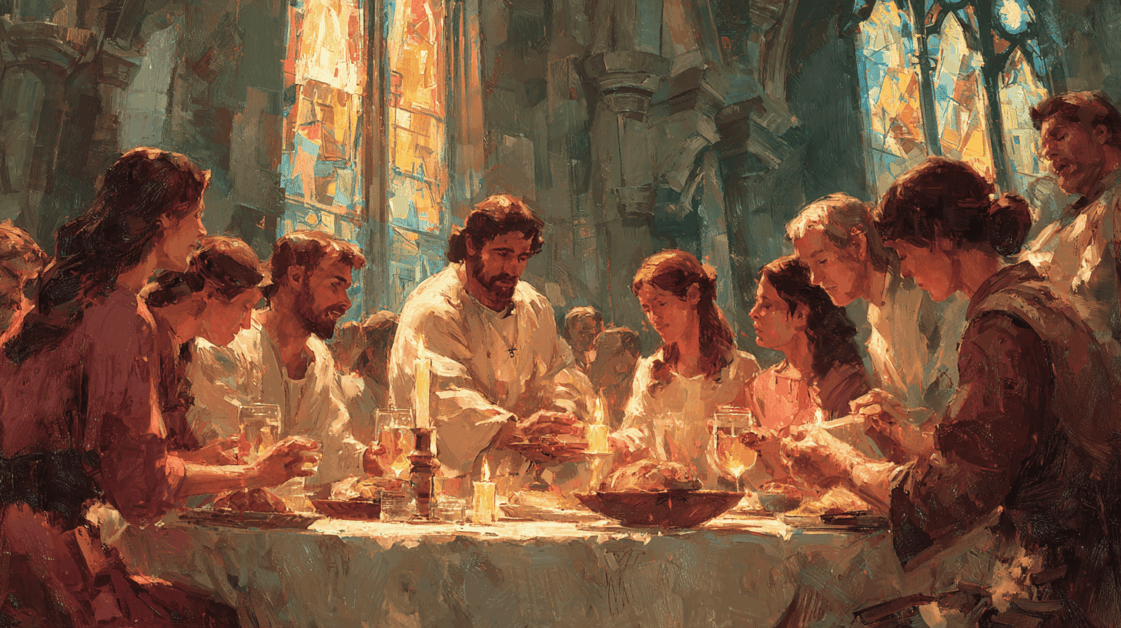
Communion is a central aspect of Christian life, serving not only as a moment of unity among believers but also as an important practice of spiritual strengthening.
In this post, we will explore what communion is, its significance in the scriptures, and how we can apply it in our daily lives.
What is Communion?
A palavra ‘comunhão' deriva do termo grego ‘koinonia', que significa compartilhar, ter em comum, participação conjunta. No contexto cristão, isso envolve não só a interação entre os membros da comunidade de fé, mas também a relação pessoal do crente com Deus. A comunhão é expressa através de atividades como a adoração congregacional, a oração em conjunto, e a celebração da Ceia do Senhor.
The Importance of Communion in the Scriptures
Bible scriptures are filled with references about the importance of fellowship. In the book of Acts of the Apostles, for example, it is emphasized that the early Christians gathered regularly to share teachings, pray together, and break bread (Acts 2:42). This practice not only kept them united but also strengthened them in their walk of faith.
Another example is found in 1 Corinthians 10:16-17, where Paul explains that by partaking of the bread and the cup, we become one body, symbolizing the unity among believers. Communion, therefore, is not merely a ritual practice but a tangible expression of the love and solidarity that should exist among the faithful.
How Communion Strengthens Our Spiritual Life
The pursuit of fellowship is essential for any Christian who desires to grow in their faith. Here are some ways in which fellowship can strengthen our spiritual life:
Spiritual and Emotional Support
In times of difficulty, having a faith community can provide vital support. Brothers and sisters in Christ are there to pray, encourage, and help during challenging times.
Spiritual Growth
By sharing testimonies and experiences of faith, we learn from each other and are challenged to deepen our relationship with God. Being in fellowship with other believers can also motivate us to adopt spiritual practices we might not consider otherwise.
Collective Worship
Community worship enriches our faith experience. Together, we express praise and gratitude to God, creating an environment where God's presence can be felt more intensely.
Celebration of the Sacraments
Participating in the Lord's Supper in community is one of the most profound moments of fellowship. As we partake of Christ's body and blood, we reaffirm our faith and our unity with Him and with each other.
Relationship with God
Fellowship with other Christians enhances our fellowship with God. When we gather in His name, He promises to be with us (Matthew 18:20).
Expressions of Fellowship in Practice
Fellowship can manifest in various ways within a church or faith community. Here are some ways to involve you in practice:
- Worship Services and MeetingsActively participating in church services and meetings is a fundamental way to maintain communion. This includes not only Sunday worship but also smaller Bible study and prayer groups.
- Event CelebrationsEvents such as baptisms, fellowship dinners, and church festivals provide an excellent opportunity for the community to gather and strengthen bonds of friendship and solidarity.
- Community ServiceGetting involved in service activities, like helping those in need or missionary work, is a practical expression of fellowship. These actions reinforce Jesus' teaching to love your neighbor and assist those in need.
- Prayer GroupsOrganizing or participating in prayer groups can foster a sense of unity and encouragement among church members. Group prayer not only benefits those requesting prayer but also strengthens the bonds of those praying together.
The Challenges of Communion
Despite its importance, communion can present challenges. The diversity of personalities, opinions, and lifestyles within a community can lead to conflicts. Here are some tips on how to overcome these challenges:
- Practice ListeningListen carefully to others' concerns. This creates an environment of respect and understanding.
- Promoting AcceptanceOur unity in Christ must prevail over personal differences. Accepting one another as we are is essential for true fellowship.
- Resolving Conflicts with LoveWhen disagreements arise, addressing them with love and respect is essential. A humble heart willing to reconcile can heal wounds and bring peace back to the community.
- Focus on the Shared PurposeConstantly remembering that we all have a common calling in Christ can help unite people around a greater mission.
Conclusion
Communion is a vital aspect of Christian life, essential for our spiritual growth and for building meaningful relationships within the body of Christ. By actively participating and cultivating a spirit of unity, we strengthen not only ourselves but also our entire faith community. It is vital that we not only seek communion but also promote it, allowing Christ's love to overflow in our lives and in the lives of those around us.
May each of us strive to live in communion, recognizing the importance of this beautiful gift God has given us, and making unity a reflection of His very nature. We hope you share your experiences of communion in the comments below! Let's grow together in our faith and love.